
From SafeMind to continuous AI agent identity, cybersecurity’s biggest conference made one argument all week: defense now has to move at machine speed.
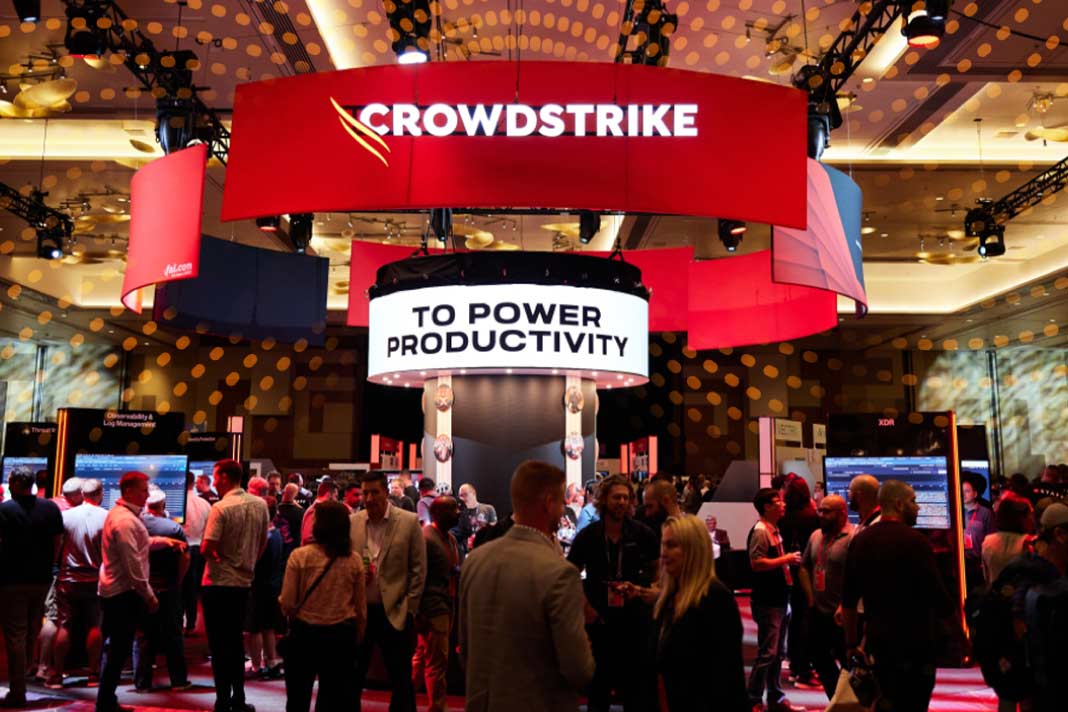
Nearly every keynote, session and product announcement at this year’s Fal.Con circled back to a single idea, stamped across the week as “Securing the AI Revolution”: AI hasn’t just changed what defenders need to protect. It’s changed how fast they need to move. Attacks are increasingly automated and carried out by AI agents rather than human operators, CrowdStrike argued all week, and security tools built for a human-paced world simply aren’t built to keep up.
Here’s what actually stood out.
An AI System Built to Fight AI Attacks
The marquee announcement was SafeMind, an agentic cybersecurity system CrowdStrike built with Nvidia on Nvidia’s open Nemotron models, alongside work out of CrowdStrike’s newly unveiled Cyber Superintelligence Lab. The idea is almost adversarial by design: an offensive model called Red Tempest hunts for attack paths while a defensive counterpart, Blue Solano, closes them, running in a continuous loop rather than waiting on a human analyst to notice something’s wrong.
Nvidia founder and CEO Jensen Huang joined CrowdStrike CEO George Kurtz onstage for the announcement, and his framing set the tone for the rest of the conference. “We’re at an inflection point in cybersecurity,” Huang told the sold-out crowd, according to Nvidia’s own recap of the appearance. “This is the beginning of a new age of cybersecurity. On the one hand, the adversaries are going to be more armed than ever.”
Watching the Watchers
If SafeMind is about fighting AI-driven attacks, Falcon Guardian is about something a little stranger: keeping an eye on the AI agents a company has already deployed. It’s built to discover and monitor agents running across enterprise endpoints, map what they’re actually doing, and enforce controls on their behavior in real time. The agent itself, in other words, becomes something that needs watching — not just the traffic it generates.
That’s part of a bigger shift CrowdStrike leaned into all week. In its telling, AI agents are becoming a new category of actor inside the enterprise, sitting alongside employees and service accounts, and one that needs the same kind of oversight.
Also Read: The New Boardroom Problem: How Do You Measure AI’s ROI?
Everyone’s Quietly Obsessed With Continuous Identity
If there was a phrase repeated in nearly every hallway conversation, it was “continuous identity.” CrowdStrike President Michael Sentonas walked through the idea in detail: rather than granting an AI agent broad access once at login, authorize every action it takes, in real time, as it takes it. The concept traces back to CrowdStrike’s roughly $740 million acquisition of identity security firm SGNL earlier this year, since productized in June as Continuous Identity for AI Agents.
Krista Case, principal analyst and practice lead for cyber resilience and security at theCUBE Research, called it one of the standout announcements of the event’s second day. “It’s looking at continuous authorization, having that continuous approach, as AI agents are continuously accessing data and taking actions,” she said in an on-air analysis captured by SiliconANGLE. The harder problem, she added, isn’t just knowing what an agent is allowed to do: “It’s about understanding how their behavior evolves over time and having the right safeguards in place to prevent them from going off the rails, whether maliciously or just through drift.”
A Demo That Made “Machine Speed” Feel Real
Most of Fal.Con’s messaging about AI-speed attacks could have stayed comfortably abstract. One moment didn’t let it. CJ Moses, Amazon’s chief information security officer, told the audience that the company’s MadPot honeypot network had caught an AI agent independently running a full cyberattack, start to finish, in 12 minutes and 42 seconds — a figure first reported by VentureBeat. “It was 94 events, zero syntax errors, the ability for it to respond in less than 500 milliseconds,” Moses said onstage alongside Sentonas, and the room, by most accounts, went quiet.
CrowdStrike’s own numbers backed up the urgency: its 2026 Global Threat Report cited an 89% year-over-year jump in attacks it classifies as AI-enabled. Adam Meyers, the company’s senior vice president of counter adversary operations, put it more bluntly, saying CrowdStrike had seen almost as many agentic adversaries in the previous month alone as in the six months before that combined.
A Wider Footprint, and a Not-So-Subtle Jab at Rivals
CrowdStrike also used the week to expand where its platform actually runs, announcing that Falcon is now available on Google Cloud infrastructure — giving customers more flexibility on deployment and data residency. It broadened its ambitions on the data side as well, positioning its next-generation SIEM as an aggregation layer that ingests telemetry from third-party tools, not just its own endpoint agents.
Kurtz wasn’t shy about drawing a competitive line, either. Asked at a press roundtable how many companies could realistically build a full security stack spanning model, harness, platform and ecosystem, he put the number at fewer than five, according to VentureBeat. “This isn’t a copilot that’s baked into someone else’s intelligence,” he said during his Sept. 1 opening keynote — a pointed jab at rivals leaning on someone else’s foundation models rather than building their own.
Also Read: Before You Audit Your Algorithms, Audit Your Data
The takeaway
Fal.Con 2026 wasn’t really a product showcase. It was an argument about tempo — that the shift to agentic, AI-driven attacks means defenders can no longer operate at human speed and expect to keep up. Whether CrowdStrike’s own AI-native bets, SafeMind, Falcon Guardian, continuous agent identity, actually hold up under that pressure in production is the question the industry will spend the next year testing. It’s not the one Las Vegas answered.