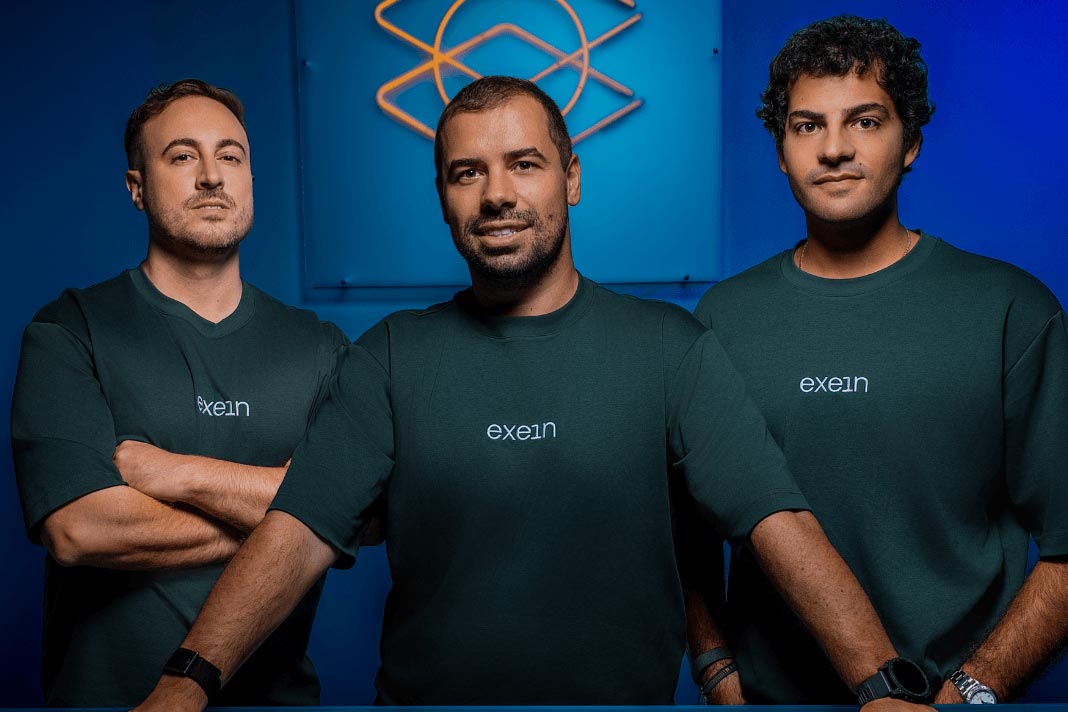


The Physical AI cybersecurity company’s new round makes it Europe’s most valuable cybersecurity startup as it builds AI models to protect connected machines.
Exein, the Physical AI cybersecurity company, on Monday announced $270 million in new funding at a $1.7 billion valuation, a figure the company says makes it Europe’s most valuable cybersecurity startup.
Exein’s AI-powered technology spans more than 2 billion connected devices across sectors including industrial automation, automotive, energy, healthcare, semiconductors, aerospace and robotics.
Through Photon, Exein delivers preemptive runtime security for connected devices, Physical AI, autonomous AI agents, and cloud and edge infrastructure. The company says it is building the global standard for runtime cybersecurity, describing its goal as a “digital immune system for connected life.”
Headline led the round, with participation from Sofina, Goldman Sachs, European Investment Bank Group through ETCI, KfW Capital and T.Capital, along with previous investors Balderton, HV, Intrepid Growth Partners, 33N Ventures, Lakestar, Supernova Invest, Blue Cloud Ventures and Geodesic Capital. Exein said the round was significantly oversubscribed.
The raise comes alongside an upsizing of Exein’s existing revolving credit facility, led by J.P. Morgan, with KfW joining as an additional lender.
Exein said its valuation has increased 30-fold in two years, which it attributed to rapid commercial and international growth. The company said its annualized recurring revenue for the first half of 2026 was up fourfold from the same period a year earlier.
Also Read: The New Boardroom Problem: How Do You Measure AI’s ROI?
Building Security for the Physical AI Era
As AI moves into machines that perceive, decide and act in the physical world, new security challenges are emerging. Earlier this year, Exein launched Photon, a kernel-level runtime security architecture designed to block malicious execution before an attack can run.
Exein is now developing a proprietary foundation model for Physical AI security, trained on machine telemetry generated through its technology across more than 2 billion devices. Unlike general-purpose models trained largely on human-generated data, the company says its model learns from years of data on how machines actually operate.
The model is intended to power autonomous security agents designed to protect systems at machine speed without waiting for human intervention.
Exein plans to introduce the architecture by the end of 2026, with its first foundation models expected in the first quarter of 2027. The move comes as cyberattacks themselves accelerate: Exein said it now sees around 5,000 new, non-repetitive attacks across its network each week, five times the level recorded a year ago.
Also Read: What Are VLA Models? How Vision, Language and Action Work
Accelerating Global Expansion
Exein is already a global business, with around 50% of its revenue coming from the Asia-Pacific region and operations spanning Europe, Asia-Pacific and the United States.
Since its previous funding round in December 2025, Exein has established its APAC headquarters in Taiwan and secured new partnerships across semiconductors, industrial computing and connected infrastructure.
The company said the new funding will accelerate its expansion in key markets, including the U.S. and APAC. Over the next two years, Exein plans to increase U.S. hiring, expand its customer base and partnerships, and open a new office in the San Francisco Bay Area. The company said it will continue to pursue M&A opportunities as it expands its technology platform and global footprint.
Gianni Cuozzo, founder and CEO of Exein, said: “AI is moving out of the cloud and into the physical world, and this is the transition Exein was built for. We’ve developed deep expertise in how machines operate, invested heavily in the technology needed to protect them, and built a global footprint that gives us an understanding of machines at a scale few others can match. Frontier models are pushing the patch window to zero. Attacks now happen at machine speed, so defense has to as well. Physical AI is the natural next step for Exein: We’re building machine-time security for machine-time attacks.”
Clarey Zhu, partner at Headline, said: “As AI moves into robots, vehicles and critical infrastructure, securing the physical world will become one of the defining cybersecurity challenges of the next decade. Exein’s deep expertise in embedded systems and unique machine data give it a powerful advantage as it scales globally, and that advantage traces back to the team. Gianni and his team have incredible technical and commercial depth; they put customer trust above all else, and they have always chosen the harder, long-term-oriented path. We’re honored to help them build a global leader in Physical AI security.”