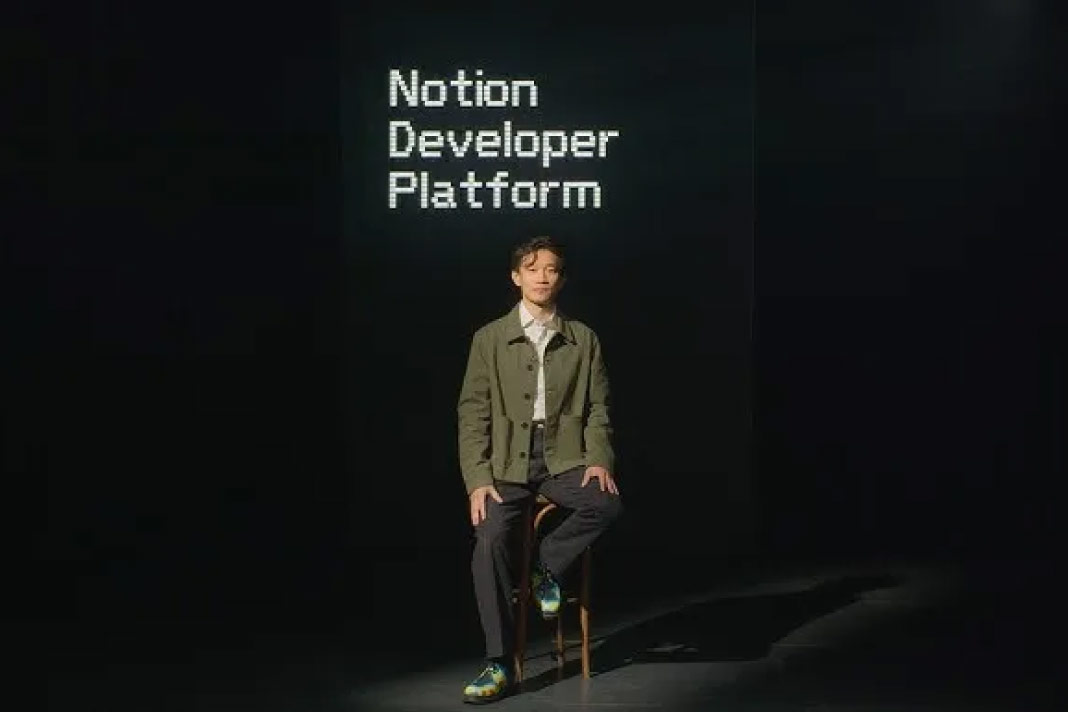


Notion built its reputation on making work easier to organize. Now it wants to be the platform where work gets done — by humans and agents alike.
Notion, the collaborative productivity software maker best known for its note-taking and knowledge management tools, has launched a Developer Platform that significantly expands what its software can do — and what it is positioning itself to become.
Announced in a livestreamed product event on Wednesday, the platform introduces custom code execution, external database synchronization, deeper AI agent interoperability, and a command-line interface for developers. Together, the additions represent a deliberate repositioning: from a productivity application with AI features to a programmable orchestration layer where people, agents, and live data can work together across tools and systems.
Why Now
Notion launched its Custom Agents feature in February, offering AI teammates capable of handling repetitive tasks such as answering frequently asked questions, compiling status updates, and automating workflows. The response was significant — customers have since built more than one million agents on the platform.
But the agents had meaningful limitations. They could not connect with external data sources or apply custom logic. The external agents enterprise teams were already using had no reliable way to integrate with the Notion workspace. Teams worked around these constraints through third-party automation platforms or custom scripts running on their own infrastructure — exactly the kind of friction that erodes the case for a unified platform.
The Developer Platform is designed to close those gaps.
Also Read: Healthcare Is Scaling AI Without the Infrastructure to Manage It
What It Does
The centerpiece of the launch is Notion Workers — a cloud-based environment for running custom code in a secure, isolated sandbox. Teams can write their own logic and deploy it directly within Notion, enabling data synchronization, custom tool construction, and webhook-triggered automation without relying on external infrastructure. For teams that prefer not to write code themselves, Notion notes that AI coding agents can handle that step.
Workers will use the same credit system as Custom Agents, but are available at no cost through August, giving developers time to experiment without commercial pressure.
Database synchronization, powered by Workers, allows teams to pull live data from any database with an API — including Salesforce, Zendesk, and Postgres — directly into Notion databases and keep it up to date. “Use your Notion database as a sheer canvas to power both your workflows and your agents,” said Ivan Zhao, Notion’s co-founder and chief executive, during the announcement.
For teams whose integration requirements exceed what the Model Context Protocol standard can provide, Workers can also build agent tools with custom logic — handling edge cases and company-specific workflows that off-the-shelf connectivity cannot address.
Agent Interoperability
Perhaps the most strategically significant addition is the ability to chat directly with external AI agents, assign them work, and track their progress from within Notion — as if they were native custom agents. At launch, supported partner agents include Claude Code, Cursor, Codex, and Decagon, with additional integrations planned.
An External Agent API extends this further, allowing organizations to connect internally built agents — those designed for company-specific workflows — with the Notion workspace. The combination effectively makes Notion a single coordination point for AI work happening across multiple systems and agent frameworks.
Developers and agents interact with the platform through the Notion CLI, available on Business and Enterprise plans.
Also Read: Inside Google’s $175 Billion Bet on the Agentic Enterprise
The Strategic Shift
The Developer Platform marks a meaningful change in how Notion conceives of its own role. The company has historically occupied a comfortable position as a flexible, user-friendly workspace tool — powerful enough for complex knowledge management, approachable enough for individuals and small teams.
The new platform moves toward a different market: workflow automation infrastructure for enterprises increasingly looking to build internal AI systems, automate knowledge work, and coordinate agents across software environments. In that market, Notion competes less with note-taking alternatives and more with automation platforms and enterprise middleware.
“It’s true that, historically, Notion hasn’t been the most developer-focused platform,” Zhao acknowledged during the livestream. “But things are changing.”
The breadth of the ambition was clear in his summary of the platform’s scope: “Any data, any tool, any agent — that’s the big picture for the Notion Developer Platform.”
Whether Notion can execute on that vision at enterprise scale — and whether its existing user base follows it into more technical territory — will determine whether Wednesday’s announcement marks the beginning of a genuine platform transition or an ambitious experiment. The early adoption numbers for Custom Agents suggest there is appetite. The Developer Platform is the test of whether Notion can serve it.