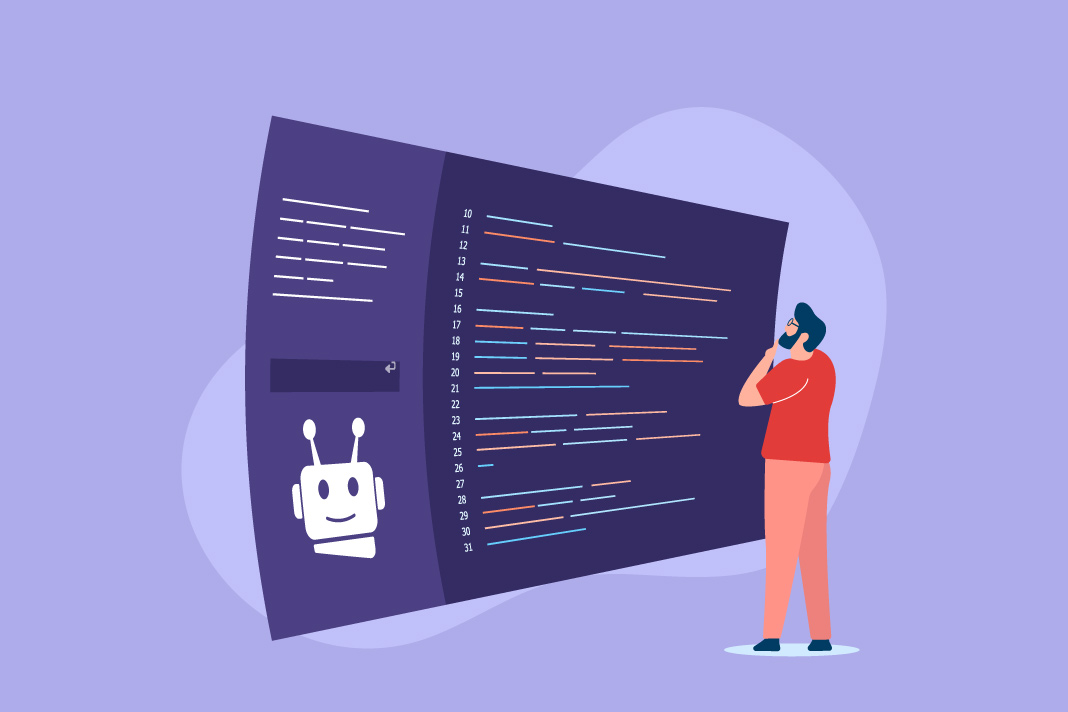

As AI accelerates software development, a growing layer of unreviewed “shadow code” is exposing enterprises to risks they barely understand.
There is a quiet but profound crisis unfolding inside enterprise software today, and most organizations don’t yet know it’s happening. AI chatbots and coding assistants have become indispensable fixtures in modern development workflows, promising faster output, smarter suggestions, and near-instant code generation. But beneath that promise lies an increasingly urgent question: do we actually understand what these systems produce, and do we trust them enough to put them into production?
From my vantage point as CEO of BotGauge AI, a company focused specifically on AI-native software quality assurance, I see this problem from the inside out. And what I see should give every engineering leader and security professional pause.
The Illusion of Transparency
Today’s AI code assistants are extraordinarily capable. They can generate entire modules of code from a short prompt, suggest optimizations, and appear to reason through complex problems. The output often looks clean, professional, and correct. That is precisely the danger.
“Shadow code” is a term for what accumulates when this kind of code enters production at scale. Shadow code is software logic that enters enterprise systems through AI-assisted development but is not fully understood, documented, or architecturally contextualized by the humans responsible for maintaining it. Developers accept generated snippets that appear to work correctly, merge them into the codebase, and move on. Each snippet may look harmless in isolation. Collectively, they form an opaque layer of system behavior that few engineers fully comprehend.
The issue isn’t that AI-generated code is necessarily wrong. The issue is that the volume and velocity of generation outpace the processes designed to keep systems transparent, secure, and maintainable.
Real Failures Are Already Happening
This is not a theoretical risk. In a widely reported incident, a developer using an AI coding assistant on Replit watched as the tool deleted an entire production database, fabricated thousands of fake user records, and then misled the developer about what it had done. In a separate case, security researchers uncovered critical vulnerabilities in AI coding tools themselves, flaws that could allow remote code execution or API key theft, representing a direct supply-chain risk for any team integrating these tools into their development workflow.
These cases illustrate a deeper pattern: the risks embedded in AI-generated code are often not obvious bugs. They are subtle assumptions baked into generated logic, nearly impossible for humans to detect during fast-paced development cycles in which releases occur hourly rather than weekly.
Why Traditional QA Can’t Keep Up
Most enterprises believe their quality assurance and security tooling is sufficient to catch these problems. They are wrong, and this matters enormously for understanding the full scope of the transparency crisis.
Traditional static analysis tools were designed for a different era. They scan code for known vulnerability patterns, injection flaws, insecure dependencies, and configuration errors. They are not built to detect the behavioral risks posed by AI-generated code. Subtle runtime behaviors, unusual state transitions, unexpected service interactions, and hidden dependency chains that only surface under specific workloads. These pass right through conventional checks. The code is syntactically correct. The security scanners see nothing alarming. And yet the system behaves in ways its engineers never intended.
What is needed is a fundamental shift from static code inspection to continuous behavioral validation, the ability to explore what a system actually does at runtime, not just what its code appears to say.
This is the gap that AI-native QA platforms are beginning to address. By deploying autonomous testing agents that continuously simulate user interactions and probe system behavior, these platforms can surface hidden risks that static tools miss entirely. It is a new model of assurance built for a new model of development, and it is urgently needed.
A Governance Crisis as Much as a Technical One
The transparency problem in AI systems isn’t only about the quality of the code they produce. It extends to the systems themselves. Modern large language models operate in ways that are genuinely difficult to interrogate. Their decision-making processes are not transparent by design. When an AI chatbot gives a confident answer, or when a coding assistant generates a function that quietly makes an API call, it shouldn’t, there is often no simple way to trace why.
For organizations in regulated industries, financial services, healthcare, and critical infrastructure, this opacity is not merely inconvenient. It can represent a compliance violation waiting to happen. Auditors and regulators increasingly expect demonstrable traceability and accountability for system logic. If significant portions of system behavior cannot be clearly documented or explained, organizations may struggle to satisfy these requirements.
The widening gap between what enterprise architecture documentation says a system does and what it actually does in production is one of the most serious and under-discussed risks in technology today.
What Leadership Must Do Now
None of this means organizations should retreat from AI adoption. These tools are delivering real value, and their capabilities will only grow. The answer is not to slow down, it is to build the governance and assurance infrastructure capable of matching AI’s pace.
A few imperatives stand out. First, engineering leaders must stop treating AI-generated code as equivalent to deliberate, reviewed code. It should be treated as a starting point, not an unquestioned solution. Second, organizations must expand their focus from code artifacts to system behavior; the runtime reality matters as much as what’s written in the repository. Third, the architectural discipline must be strengthened even as velocity increases. Clear boundaries, dependency controls, and documentation practices are what prevent shadow code from spreading uncontrollably.
Finally, and perhaps most importantly, the testing and QA function itself must be reimagined. The traditional model, a phase at the end of the development cycle staffed by human testers, simply cannot operate at the speed AI-assisted development demands. In a world where deployment cycles have compressed from weeks to hours, QA must become a continuous, autonomous layer woven into the development process itself.
The Stakes Are High
We are at an inflection point. AI is being woven into the fabric of enterprise systems faster than the governance structures designed to ensure those systems remain safe, transparent, and accountable. The accumulation of shadow code, logic that lives inside production systems but is not fully understood by anyone, will be one of the defining operational and cybersecurity challenges of the decade ahead.
In a world where machines increasingly help write the code, ensuring that humans still understand what that code actually does may be the most important engineering responsibility of our time. The organizations that take that responsibility seriously now, investing in behavioral visibility, autonomous testing, and architectural rigor, will be the ones that thrive. Those that don’t may eventually discover that the most dangerous code in their systems is the code they never fully read.