
The next cybersecurity crisis will not arrive as an attack. It will arrive as a convenience that quietly became a dependency — and then an obligation.
America is entering a new kind of arms race. Not one fought with missiles, oil, politics, or involving territory, but with intelligence itself.
Artificial intelligence is no longer just a productivity tool sitting in marketing departments or customer service platforms. It has become infrastructure. It shapes decisions, influences behavior, automates operations, generates software, filters information, and increasingly acts on behalf of humans inside systems we barely understand.
That changes everything.
The new reality is solidifying: the United States is rapidly building economic, governmental, and social dependency on AI systems, and even though it is by far the country that invests the most to lead on infrastructure, progress, and innovation, it does not fully control, fully understand, or fully govern the technology layers that power and distribute artificial intelligence. And most organizations still treat this as an IT conversation instead of what it really is — a national security issue.
The danger is not simply that adversaries will use AI against us. The danger is that we are wiring and augmenting our institutions, companies, and workflows with intelligence layers that are reshaping our economy, culture, and operational resilience faster than ever before.
That is turning into the next cybersecurity crisis.
The Shift Most Leaders Still Underestimate
For the past two years, public attention has focused on generative AI. Chatbots. Content generation. AI-generated images and sound. Productivity gains and their resulting workforce layoffs.
But generative AI was only the beginning.
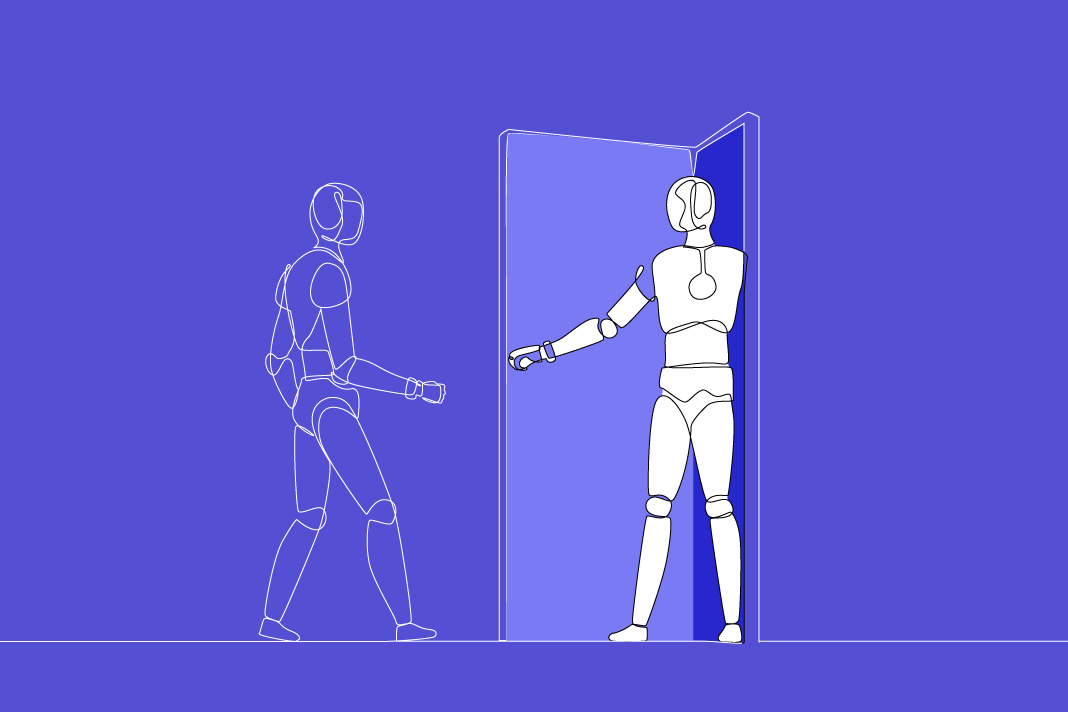
The next wave of the revolution, building on this foundation, is agentic AI: systems capable not only of generating information but also of making decisions and taking action autonomously. These AI agents can reason methodically, power through tasks, execute entire workflows, retrieve data from everywhere, coordinate with other systems, and make operational recommendations at scale.
That means AI is no longer just assisting workers. It is beginning to operate alongside them.
Inside enterprises today, AI systems are already reviewing contracts, summarizing claims, writing code for entire software platforms, triaging customer requests, analyzing financial signals, flagging all sorts of anomalies, and orchestrating workflows across platforms. And more of them are doing these things better than humans because AI is tireless, methodical, focused, and relentless.
The productivity gains are real. But so is the exposure because every autonomous layer we introduce into critical systems expands the attack surface.
Dependency Is the Real Threat
The greatest cybersecurity threat posed by AI is not a Hollywood-style rogue self-aware machine. It is a dependency.
The moment a company can no longer explain how critical decisions are made inside its systems, it has already lost part of its operational sovereignty.
The moment a government relies on external AI infrastructure to process intelligence, manage public services, or support national decision-making, it introduces strategic vulnerability.
The moment businesses outsource institutional reasoning to opaque systems trained elsewhere, governed elsewhere, and operated elsewhere, they become tenants inside someone else’s intelligence architecture.
Convenience slowly becomes dependency. Dependency slowly becomes obedience.
That is how nations lose strategic leverage in the digital age.
AI Magnifies Every Existing Weakness
Cybersecurity has always been asymmetric. Attackers only need one opening. Defenders must secure everything. AI deployed on both sides of this battlefield supercharges that imbalance.
Adversaries can now automate phishing campaigns, generate convincing synthetic identities, manipulate media at scale, write malware faster, probe systems continuously, and launch influence operations with unprecedented sophistication.
Deepfakes are already capable of impersonating executives, financial officers, and political figures convincingly enough to bypass human trust mechanisms. They already influence narratives, and a 2025 Microsoft study found that humans correctly guess whether an image is real or generated only 62% of the time.
AI-generated fraud is entering an industrialized era, yet many organizations continue to deploy AI systems internally without clear governance, oversight, traceability, or accountability frameworks. This is the equivalent of plugging autonomous machinery into a factory floor without installing emergency shutoffs.
Also Read: 100 Things Google Announced at I/O 2026
The Illusion of Neutral AI
Another dangerous misconception is the belief that AI systems can somehow become fully neutral or unbiased. They cannot, because their training reflects our society. Every model leverages the assumptions, incentives, datasets, and worldviews embedded into its training and reinforcement process.
That matters because AI systems increasingly shape how information is ranked, filtered, summarized, and delivered to populations.
In practice, this means AI systems can influence culture, political discourse, consumer behavior, hiring decisions, lending outcomes, and access to knowledge and opportunity.
The issue is not whether AI contains bias. The issue is whether organizations are honest about the assumptions driving these systems and transparent enough to remain accountable for them. And users of AI must remember that you can always prompt your way out of built-in bias.
America’s Real AI Gap Is Human, Not Technical
The United States does not primarily face an AI technology shortage. It is by far the country investing most in the development and deployment of the layers of technology involved in the revolution.
What it faces is a true workforce readiness crisis. Too many organizations are deploying advanced systems while lacking people capable of governing, supervising, auditing, and operationalizing them responsibly.
This is why the future belongs to what we call business-first technologists: Individuals capable of combining creative impulse, technical fluency, critical thinking, cybersecurity awareness, operational judgment, and human accountability.
The AI era does not reduce the need for humans. It raises the quality threshold for the humans who remain in the loop. In such a context, reskilling becomes a national priority.
The next generation of technologists cannot simply be coders. They must become designers and orchestrators of intelligence systems. They must understand infrastructure, governance, ethics, security, systems thinking, and business outcomes simultaneously.
Because in the age of AI, technical execution alone becomes commoditized. Judgment becomes the premium skill.
Also Read: How Network-as-a-Service Can Drive Sustainable IT
What America Must Do Next
First and foremost, organizations must stop treating AI adoption like a race for headlines. The goal should not be deploying the most AI to meet insatiable demand. The goal of #AIDoneRight should be to deploy AI responsibly, securely, and strategically at a pace that allows the structural and societal changes it provokes to be properly assimilated.
Second, businesses need to preserve explicit human-in-the-loop governance models. Every AI system affecting financial decisions, public policies and services, cybersecurity operations, or customer outcomes should have clear accountability structures and escalation paths.
Third, the United States must invest urgently and aggressively in AI literacy and workforce transformation. Not just for obsolete engineers whose skills have become outdated, but also for executives, regulators, frontline operators, educators, and public institutions.
Fourth, AI infrastructure must be treated as strategic infrastructure in its own right. That includes compute capacity, cybersecurity standards, model transparency, supply-chain resilience, and sovereign operational control over critical systems.
And finally, we must remember something simple but essential:
Technology should serve the mission. Not to replace human responsibility. The companies and countries that thrive in the AI era will not be the ones chasing every new model announcement. They will be the ones capable of aligning intelligence, infrastructure, security, and human judgment into systems people can actually trust.
Because the real cybersecurity crisis ahead is not that machines are becoming intelligent or more intelligent than humans faster than humans can fathom, it is that humans may stop paying attention to who remains accountable when they are.