
The IT industry emits more greenhouse gases than most countries. Network-as-a-Service is emerging as one of the more practical tools for addressing it.
Digital transformation has delivered genuine competitive advantages to businesses across the globe — greater efficiency, richer customer experiences, and expanded market reach. It has also contributed significantly to the world’s carbon footprint. Those two facts are increasingly difficult to hold separately, and the technology industry is being asked to reckon with both simultaneously.
The numbers are sobering. If the IT sector were a country, it would rank as the world’s fifth-largest emitter of greenhouse gases. Approximately 50 million tonnes of electronic waste are generated globally every year, and that figure is rising. Addressing this environmental burden requires coordinated effort across the entire technology ecosystem — from hardware manufacturers to channel partners to end customers. Increasingly, it also requires that sustainability be built into how technology is consumed, not just how it is made.
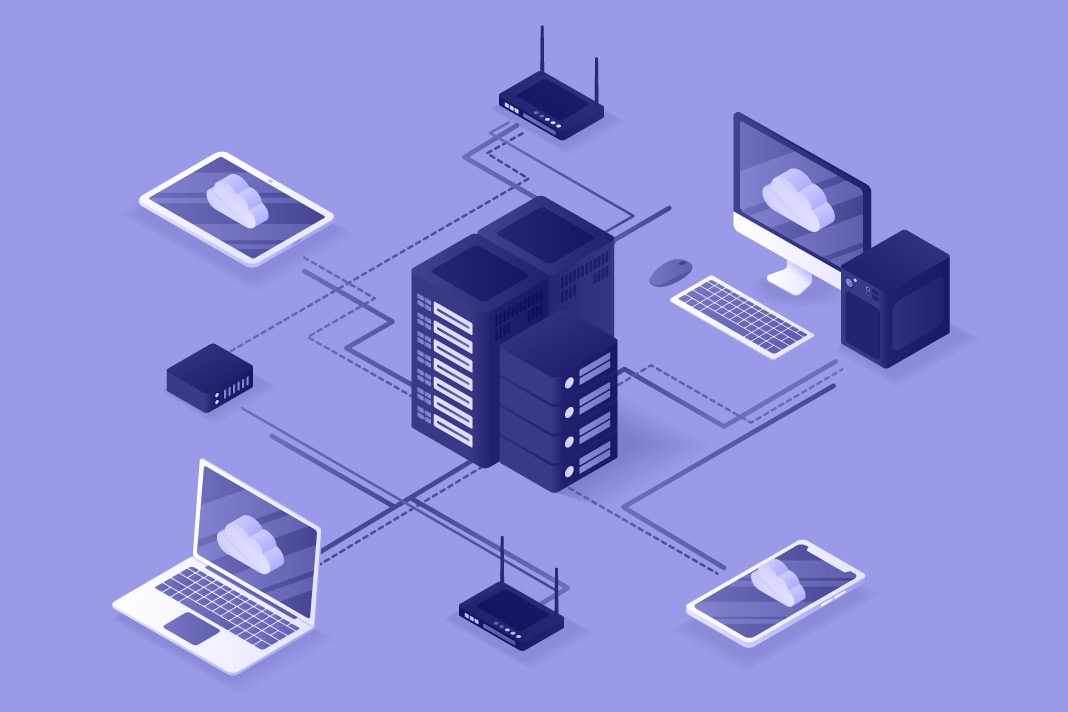
Network-as-a-Service (NaaS) is emerging as one of the more practical entry points for that shift.
The Sustainability Case for NaaS
Recent research from Aruba indicates a growing appetite for the NaaS consumption model among organizations across Europe, the Middle East, and Africa. The model is already recognized by prospective customers as a driver of financial flexibility and operational agility. Its environmental credentials are less widely understood but equally significant.
Channel analyst Canalys has noted that the ability to position sustainability as part of an IT-as-a-service offering is becoming central to partner competitiveness, and that environmental accountability in IT investment will be among customers’ top purchasing priorities within the next two to three years. For channel partners, the implication is clear: sustainability is no longer a differentiator. It is becoming a baseline expectation.
Optimizing Energy Consumption
NaaS allows organizations to access enterprise-grade network infrastructure on a subscription basis, managed by vendors with the expertise and scale to optimize energy consumption in ways that individual IT teams rarely can. By combining a channel partner’s understanding of a customer’s specific business requirements with a vendor’s depth of product knowledge, the model enables network configurations that reduce power draw without compromising performance.
Leading NaaS vendors are going further. Aruba, for example, sources electricity from renewable energy and uses AI and machine learning models to reduce power consumption across its network infrastructure. For customers seeking to reduce their operational carbon footprint, these capabilities represent meaningful progress — delivered through the subscription model rather than requiring internal capabilities they do not have.
Environmental credibility in a NaaS offering, however, must extend beyond the vendor’s own operations. Channel partners have a responsibility to ensure that the vendors they work with maintain certified sustainable practices throughout their supply chains — embedding climate-conscious standards at the top of the value chain rather than treating them as a marketing footnote. HPE, through its GreenLake for Aruba platform, has reduced operational greenhouse gas emissions by 53 percent from 2016 levels and achieved a 30-fold improvement in the energy performance of its product portfolio over the same period.
Also Read: Healthcare Is Scaling AI Without the Infrastructure to Manage It
Reusing Hardware
NaaS offerings are increasingly bundled with IT asset disposition services — a practice that focuses on reusing, recycling, or responsibly disposing of unwanted IT equipment. According to IDC, 77 percent of businesses view IT asset disposition assistance and e-waste services as an essential component of a NaaS offer.
By incorporating asset decommissioning strategies into their NaaS proposition, channel partners enable customers to participate in the circular economy — extending the useful life of products, reducing waste, and recovering value from equipment that would otherwise sit idle or be discarded prematurely.
The commercial logic reinforces the environmental one. Upcycling and remarketing functional assets generate returns that can be reinvested in innovation. Choosing pre-owned equipment where performance requirements allow it frees budget for projects where new technology is genuinely necessary. As IT budgets tighten and technology lifecycles shorten, the circular model offers a practical response to both pressures simultaneously.
Delivering Environmental Reporting
As sustainability disclosure requirements increase — driven by regulation, investor expectations, and customer demand — organizations face growing pressure to produce accurate, detailed reporting on their environmental performance. Power usage, carbon emissions, and end-of-life hardware disposal are all areas where data is increasingly required and frequently difficult to gather.
NaaS provides a mechanism for delivering that data. Channel partners with the right vendor relationships can supply customers with key environmental metrics as part of the service — relieving stretched internal IT teams of a reporting burden they are rarely equipped to carry and ensuring that sustainability commitments can be demonstrated with evidence rather than asserted with intention.
Also Read: Inside Google’s $175 Billion Bet on the Agentic Enterprise
A Practical Path Forward
Sustainability has moved from the periphery of the business agenda to its center, and the pressure on organizations to demonstrate genuine environmental progress — rather than simply announce targets — is intensifying. Channel partners are positioned to play a significant role in that transition, connecting customers who need greener IT with vendors who have the infrastructure, expertise, and accountability frameworks to deliver it.
A well-constructed NaaS offering addresses the environmental challenge across multiple dimensions simultaneously: reducing energy consumption through intelligent infrastructure management, extending the life of hardware through asset reuse programs, and providing the reporting data that allows organizations to demonstrate progress to the stakeholders watching most closely.
The subscription model is not just a financial convenience. In the right hands, it is a sustainability strategy.