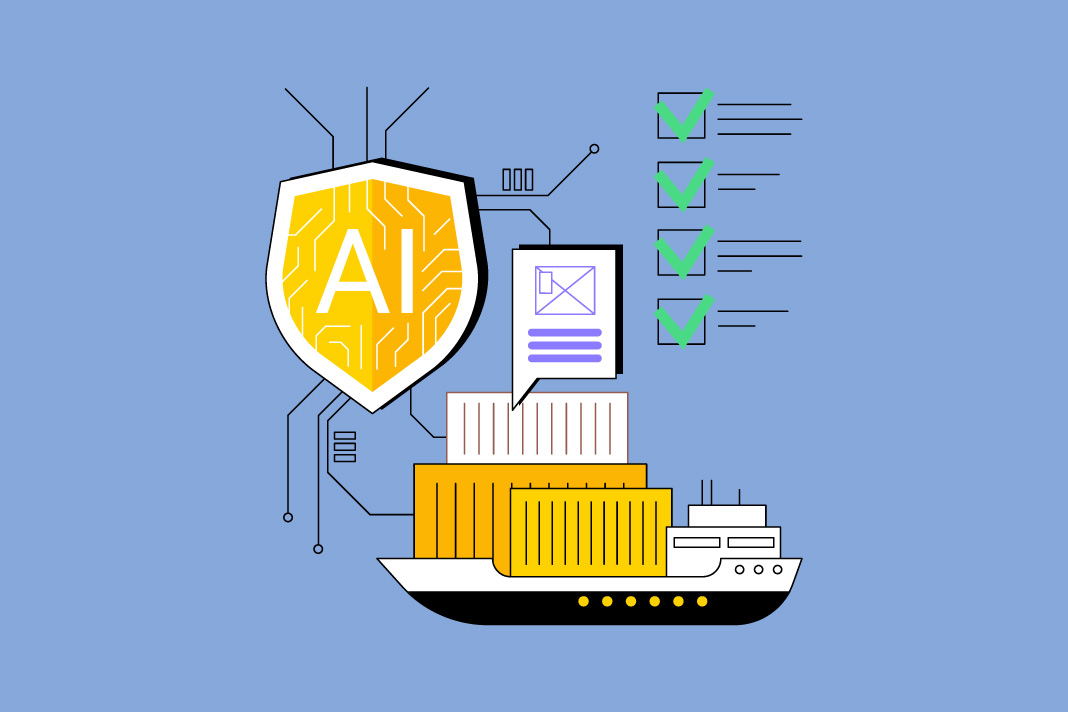

Data poisoning doesn’t hack your systems — it corrupts how your AI thinks. Here’s what supply chain leaders need to know before it’s too late.
AI-powered verification tools are becoming increasingly essential for helping organizations authenticate products and monitor inventory. These systems promise speed and scale, but they also come with risks. One of the most serious is data poisoning, an attack that targets the AI’s learning process itself.
What Is Data Poisoning?
Data poisoning is a type of cyberattack in which bad actors intentionally manipulate the information used to train an AI model. The goal is to distort the learning process so that it makes incorrect decisions in practice.
It’s like training a quality control inspector using false information or faulty examples. If you repeatedly show them defective products and tell them those are acceptable, they will eventually accept defects as the standard.
Data poisoning is becoming a growing problem across numerous industries. Recent data revealed that data poisoning affects 26% of organizations across the U.S. and UK, sabotaging key operations and creating vulnerabilities in their systems.
For supply chains that depend on AI to verify supply chain assets, this vulnerability has serious implications.
How Data Poisoning Impacts Supply Chain Verification
In ideal settings, AI model accuracy grows with more information. However, when attackers contaminate training data, these systems can fail in damaging ways.
Training Data Contamination
The effects of data poisoning often develop gradually.
An attacker may inject mislabeled examples into the dataset. For instance, they could label thousands of images of counterfeit goods as authentic. Counterfeiting is already worth $461 billion, or 2.5% of global trade. Over time, the model begins to associate counterfeit characteristics with legitimacy.
The risk increases when companies rely on expansive data pipelines. With several parties involved, there are numerous opportunities for attackers to introduce vulnerabilities if a company lacks the proper safeguards.
The Damaging Business Outcomes
Poor or inaccurate supply chain verification due to data poisoning carries tangible consequences.
Companies can suffer from financial losses. Customers can more easily access counterfeit goods, leading to lost sales. If these products fail to function as advertised, your company may face a significant amount of warranty claims or complaints, and you will have to recall any unsafe or unsellable inventory.
These inconsistencies can spiral out of control and affect your brand reputation. Customers who discover counterfeit or poor-quality products lose trust in the brand. In highly regulated industries like pharmaceuticals, health care, aerospace, or electronics, this erosion of trust can persist over the long term.
In health care, attackers with access to as few as 100 samples can compromise entire diagnostic or documentation systems witha 60% success rate. Such effects can escalate further and lead to regulatory and legal risks. In sectors with strict compliance requirements, failure to detect counterfeit or unsafe goods can trigger penalties or lawsuits.
Proactive Strategies to Defend Your Supply Chain AI
Defending against data poisoning requires strategy and operational discipline. These methods can help your organization protect data integrity and maintain reliable AI models for supply chain verification.
Secure Your Data Pipeline
It’s best to start at the source and control the data pipeline. Organizations must establish strong governance over all sources used in model training. This approach includes verifying supplier information, implementing strict access controls, auditing labeling processes and maintaining detailed logs of data modifications.
Data provenance plays a key role here. It is knowing where your information originates, who has handled it, and the changes it has undergone. It creates a transparent path that makes anomalies easier to detect.
The EU Artificial Intelligence Act supports this practice. Organizations should establish data governance systems appropriate to the purpose of their AI systems to ensure integrity and mitigate biases.
Implement Human-in-the-Loop Systems
While AI is powerful, its weaknesses are clear, making human oversight essential for accurate and efficient operations.
Human experts should regularly audit samples of AI decisions to detect unusual patterns or shifts. Sudden changes in counterfeit detection rates or inconsistent approval patterns may indicate contamination.
Human-in-the-loop systems help reduce operational risk, as people bring situational awareness and contextual decision-making that automated systems lack, especially when external manipulation might be a factor. A hybrid approach helps balance efficiency and automation with accountability and resilience.
Adopt a Multilayered Security Approach
AI verification and data governance should be part of a broader supply chain protection framework. This strategy may include:
- Physical security elements in packaging
- Serialized product tracking
- IoT sensors and trackers in shipments
- Supplier risk monitoring and vetting processes
- Continuous cybersecurity controls
When teams use AI alongside physical, digital, and procedural safeguards, a compromised element will not bring down the entire system. This comprehensive mindset strengthens overall protections and limits potential harm when one aspect fails.
The Future of Trust in Automated Supply Chains
AI-powered supply chain verification systems offer strategic advantages but also introduce new risks. Cases of data poisoning show how attackers can undermine entire systems by shaping what AI models learn and do.
Business leaders must address these issues comprehensively, spanning strategies like data governance, human oversight and layered defenses. These proactive methods allow organizations to protect key assets while maintaining efficiency.