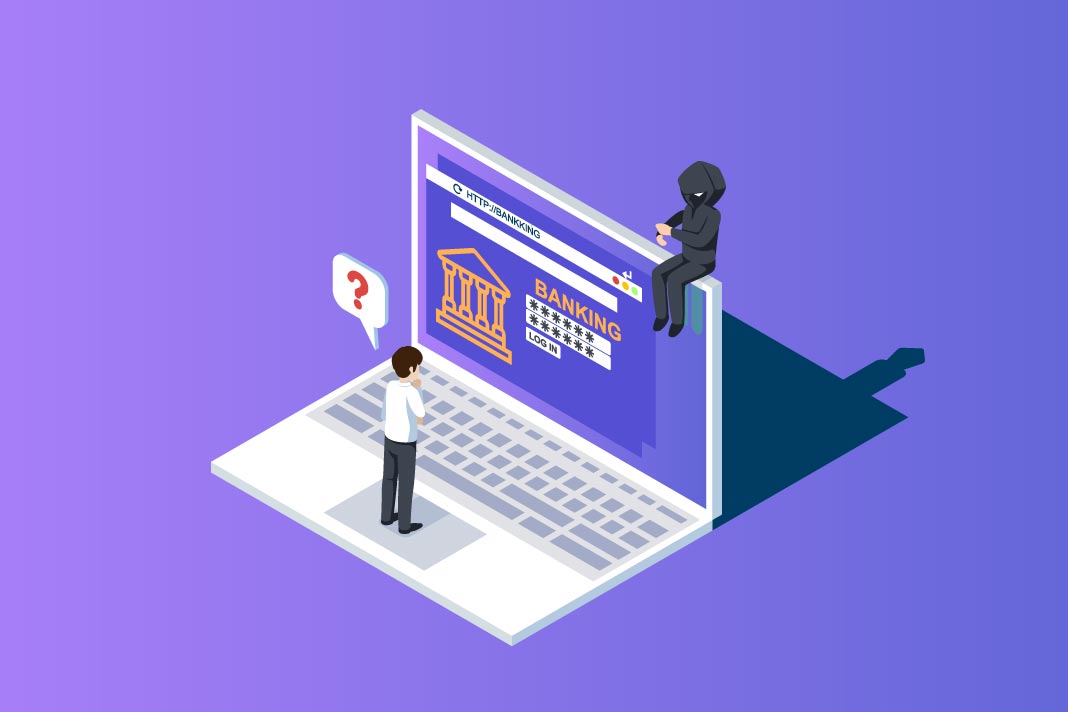


When payments settle in seconds, the only winning move is to stop fraud before it starts.
For years, banks have designed payment strategies around execution. Capture the instruction, move the money, monitor the transaction, then step in if something goes wrong. That model worked when payments were slower and easier to interrupt. But it makes far less sense in a world where money moves in seconds and, in many cases, cannot be pulled back at all.
Real–time and near real–time payments have fundamentally altered the economics of risk. Once a payment reaches the rail, there is little time to investigate and often no realistic chance of recovering the funds. While downstream monitoring still plays a key role, it can no longer carry the full weight of fraud prevention on its own.
Compounding that challenge, payment fraud itself has morphed. The most damaging incidents rarely begin with an obviously suspicious transaction anymore. More often, they start upstream, with compromised credentials, altered beneficiary details, or subtle changes made during maintenance or approval. By the time a payment is submitted for execution, those edits have flown under the radar, and the decisions are already locked in.
From a banking perspective, this creates a growing misalignment between where risk is introduced and where controls are typically applied. Payments are no longer isolated transactions as banks have historically viewed them. They are increasingly shaped by decisions made across multiple systems, long before a payment is ever submitted.
Each payment is the outcome of a sequence of decisions spanning data creation, validation, approval, release, and only then, settlement. Money movement is just the final visible moment in a much longer chain. Historically, banks have engaged with that chain at the point of submission, processing what they receive while seeing very little of what happened beforehand. In a slower payments environment, that limitation was manageable. In an instant one, it is not.
Also Read: 100 Things Google Announced at I/O 2026
What “Upstream” Really Means for Banks
When banks talk about pushing payments “upstream” it isn’t about switching rails or replacing core payment engines. It is a matter of where those safety checks sit in the flow, and how quickly banks can act on them. Upstream is where payment data is created and changed, beneficiaries are added, account details amended, and approval logic applied. It is also where the earliest indicators of fraud, error, or manipulation tend to appear.
By gaining visibility at earlier stages, banks can apply validation and control where they are likely to have the greatest impact, and with far more context than the downstream risk radar typically provides. In practical terms, this allows banks to know more, sooner, rather than reacting later when options are limited and the outcomes are harder to influence.
Earlier Fraud Detection and Upstream Payment Control
Taken together, these shifts explain why earlier fraud detection has taken on new importance. In a payments environment defined by speed and limited recovery options, the real advantage comes from identifying risk before a transaction is released. Moving control further upstream allows banks to spot suspicious changes, validate intent with more context, and intervene at the point where prevention is still possible, rather than relying on recovery after the fact.
As payment experiences become more tightly integrated into broader digital ecosystems, banks that only appear at the point of execution risk being reduced to utilities. Those who engage earlier are more likely to remain relevant to how payments are created, governed, and trusted.
Fraud prevention makes this especially clear. Downstream monitoring assumes there is time to investigate after funds have moved. Upstream control starts from a different assumption: that the most effective point of intervention is before a payment is released at all.
For example, a beneficiary change made days or weeks earlier can look completely legitimate by the time a payment is submitted, particularly if approval workflows have already been satisfied. That aligns with the Federal Reserve’s 2025 Risk Officer Survey, which found a growing share of payment fraud starts with account changes and other pre-transaction activity rather than the payment itself. Applied earlier in the lifecycle, validation and behavioral checks can surface those issues before money moves, reducing loss and avoiding the disruption of chasing fraudsters.
Richer payment data also plays a role in this changeup, but timing matters more than volume. ISO 20022 has introduced more structured, consistent data into the payments process. Applied downstream, it offers insight and analysis. Applied earlier, it helps shape decisions, strengthen controls, and reduce avoidable risk.
As banks move beyond compliance, the focus is shifting from message format alone to where intelligence is embedded in the payment flow, where controls are applied, and where trust is reinforced.
Also Read: Why Most AI Pilots Never Make It to Production
Payments Strategy Is Becoming Architectural
The push for upstream risk detection is less about adopting new tools and more about rethinking payments architecture. Speed and reach still matter, but they are no longer sufficient on their own. In a world of instant settlement and irreversible payments, execution first strategies carry real risk.
Industry bodies, including the Association for Financial Professionals (AFP), have consistently shown that while fraud rates on faster payment rails are relatively low, recovery options are far more limited when fraud does occur. That reality is pushing banks to focus more heavily on prevention and early controls, rather than relying on post-payment intervention.
Banks on a mission to push risk detection upstream are not chasing a trend. They are responding to how payments now work. By putting intelligence closer to the point of decision, banks can adapt without slowing everything down, and that change is already well underway.