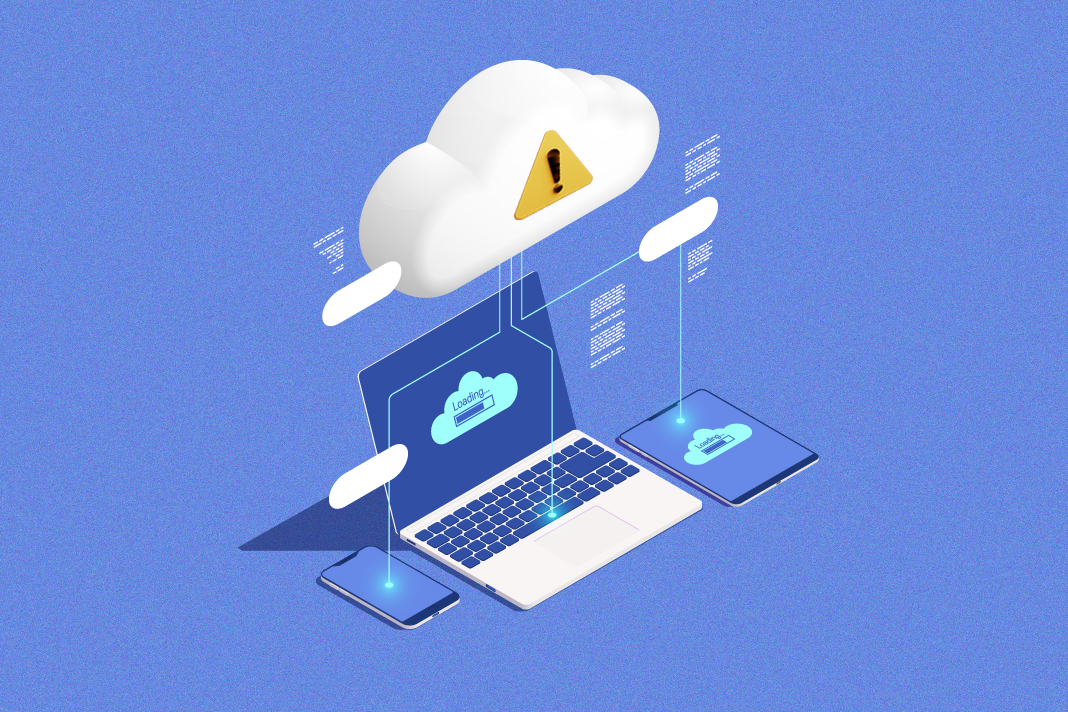


As hyperscalers tighten their grip and neoclouds emerge, 2025 marked a turning point for cloud concentration, resilience, and global policy.
For more than a decade, cloud computing has been framed as a triumph of efficiency: cheaper infrastructure, faster innovation, and near-infinite scalability. By 2025, that narrative began to fray.
What emerged instead was a more complicated—and more consequential—truth. The global cloud market has consolidated to a point where operational efficiency now carries systemic risk. Dependence on a narrow set of providers no longer affects only IT budgets or architectural decisions; it shapes economic resilience, public-sector reliability, and geopolitical exposure.
This year, cloud infrastructure stopped behaving like a neutral utility and began to resemble critical national plumbing. Governments, regulators, and enterprises alike were forced to confront a question long deferred: what happens when too much of the world’s digital infrastructure relies on too few platforms?
The warning signs were unmistakable. Competition authorities across regions intensified scrutiny of hyperscale providers, pointing to market practices that made switching complex, hybrid strategies costly, and long-term contracts functionally exclusionary. No single ruling upended the market. But taken together, these actions sent a clear signal: hyperscale dominance is no longer assumed to be benign.
Procurement practices—particularly in the public sector—offered a parallel lesson. Large, multi-year migration projects increasingly favored providers with the broadest global footprints, reinforcing incumbency rather than competition. Smaller providers, even when technically capable, struggled to meet requirements calibrated for hyperscale norms.
Then came the outages.
In 2025, cloud failures ceased to register as isolated technical mishaps. When disruptions simultaneously affected government services, financial institutions, and essential platforms, downtime became a governance issue. Parliamentary hearings, regulatory inquiries, and public scrutiny followed—not because systems failed, but because too many systems failed at once.
The debate shifted accordingly. The central question was no longer whether individual platforms were reliable, but whether the cloud ecosystem itself was resilient under stress.
Data sovereignty added another layer of tension. Enterprises increasingly discovered that geographic data residency does not guarantee jurisdictional control. Replication, processing, and access often extended across borders in ways that were poorly understood by customers and imperfectly disclosed by providers. For organizations accountable to regulators, boards, and citizens, this opacity became increasingly difficult to justify.
Yet 2025 was not defined by retrenchment alone.
A new category of provider—often referred to as neoclouds—began to gain momentum. Designed specifically for AI and compute-intensive workloads, these companies did not attempt to displace hyperscalers outright. Instead, they offered something more targeted: workload specialization, clearer economics, and greater transparency.
Their rise points to a subtle but meaningful shift. The future of cloud competition may not be horizontal, with many providers offering everything, but vertical—where specialized infrastructure challenges general-purpose dominance.
None of this signals the end of hyperscalers. Their scale, capital, and innovation capacity remain unmatched. But 2025 did mark the end of unquestioned centralization. Cloud infrastructure has become a strategic dependency, and dependencies demand governance.
The next phase of cloud computing will not be determined by pricing alone. It will be shaped by resilience, transparency, and the willingness of enterprises and governments to diversify before necessity forces their hand.
What Changed in 2025
- Cloud concentration shifted from an abstract concern to an operational reality
- Outages revealed correlated failure across sectors
- Regulators began treating cloud infrastructure as critical infrastructure
- Data sovereignty gaps became more visible—and harder to defend
What This Means for CIOs
Cloud strategy is no longer just a cost or agility decision; it is a risk-management mandate. Vendor concentration introduces systemic exposure even under strong service-level agreements, while “multi-cloud” strategies without genuine portability offer limited protection.
Immediate Actions to Consider
- Audit workload concentration across providers
- Reassess long-term contracts for exit and substitution feasibility
- Separate AI-heavy workloads from general enterprise cloud
- Demand clearer disclosure around data processing and cross-border flows
A question boards should now ask explicitly:
If our primary cloud provider failed for 24 to 72 hours, what would we struggle to explain—to regulators, customers, or shareholders?
Policy Perspective
Cloud infrastructure has quietly become one of the most concentrated layers of the global economy. In 2025, that concentration crossed a threshold—from efficiency advantage to systemic vulnerability.
Governments increasingly rely on a small number of private platforms to deliver public services, manage data, and sustain economic activity. When those platforms fail or market dynamics restrict choice, the consequences are no longer technical—they become political.
The rise of specialized cloud providers suggests markets are already seeking balance. Policy now faces a choice: reinforce concentration through inertia, or actively enable pluralism before crisis compels intervention.