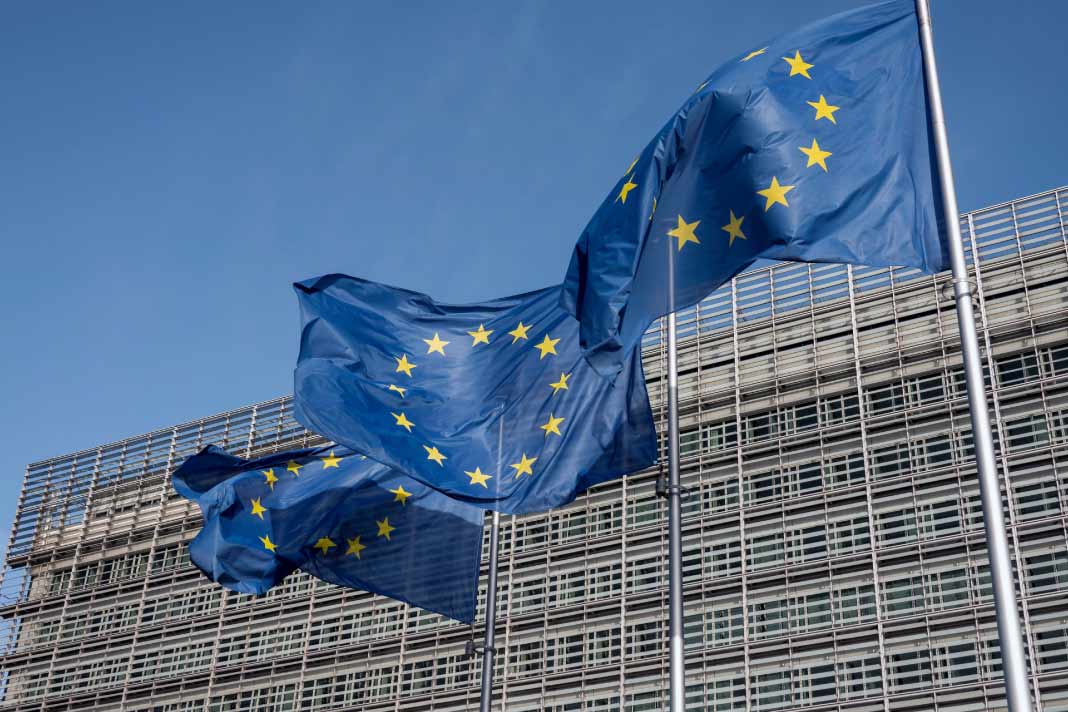


Brussels extends UK data adequacy through 2031, preserving cross-Channel data flows and offering businesses rare regulatory certainty.
Just before the holidays, the European Commission delivered a familiar—but no less welcome—gift to businesses on both sides of the Channel: certainty.
On December 22, the European Commission confirmed the renewal of the United Kingdom’s two data adequacy decisions, allowing personal data to continue flowing freely from the European Economic Area to the UK under both the General Data Protection Regulation and the Law Enforcement Directive.
The outcome was widely expected, particularly after the Commission extended its review earlier this year to assess the UK’s new Data (Use and Access) Act. Still, the decision removes a lingering source of uncertainty for organisations that rely on cross-border data transfers—and does so at a moment when regulatory clarity is in short supply.
The renewed adequacy decisions will remain in force until December 27, 2031, unless extended. They continue to carry a so-called “sunset clause,” making the UK the only jurisdiction whose adequacy status comes with a built-in expiry date.
In practical terms, the ruling means EU-to-UK data transfers can proceed without the need for Standard Contractual Clauses or other fallback mechanisms under Article 46 of the GDPR. For most organisations, existing data architectures, vendor contracts, and record-keeping arrangements can remain intact.
Also Read: EU Data Act to Reshape Data Sharing, Cloud, and IoT Rules
That does not mean adequacy is permanent—or unconditional.
The Commission will continue to monitor legal developments in the UK and retains the power to amend, suspend, or revoke the decisions if the country’s data protection framework diverges materially from EU standards. Still, with Brussels itself now exploring ways to simplify elements of GDPR compliance—and borrowing selectively from UK-style liberalisations—many observers see renewal in 2031 as the most likely outcome, at least for the GDPR decision.
For privacy, security, and commercial teams, the implications are immediate. Adequacy reduces friction and cost in complex outsourcing and processing chains. It reduces the risk of deal delays for EU–UK projects that rely on cross-border data. However, it does not replace other core obligations, including transparency requirements, purpose limitation, vendor due diligence, security controls, and data protection impact assessments, all of which continue to apply. Nor does it alter the rules governing onward transfers from the UK to third countries.
In short, the decision restores stability without rewriting the rulebook.
Henna Virkkunen, the Commission’s executive vice-president for tech sovereignty, security, and democracy, said the renewal “benefits businesses and citizens alike” by preserving trusted data flows while reducing administrative burdens. “This continuity allows European companies to keep sharing data seamlessly with their UK partners,” she said, “supporting innovation, competitiveness, and digital cooperation.”
Also Read: Data Isn’t Just About Numbers; It’s About Narrative
Ian Murray, the UK Minister for Digital Government and Data, welcomed the move, calling it a reaffirmation of both sides’ commitment to “secure, trusted data flows” that support growth and innovation.
For now, at least, the message is clear: no last-minute re-papering of data flows, no holiday-season compliance scramble—a sensible decision—and a timely one—for two economies still deeply intertwined by data.